News
 Aug. 17, 2026
A poorly matched public address system can create far more than unpleasant sound. Excessive heat, intermittent shutdowns, speech intelligibility problems, inefficient power consumption, and premature loudspeaker failure can disrupt schools, factories, retail stores, transport facilities, hotels, and event venues. In many installations, the root cause is not the loudspeaker alone—it is the amplifier architecture, incorrect impedance matching, insufficient thermal management, or a lack of DSP control. Choosing an AISP Digital Class D PA Amplifier can address these issues by combining high efficiency, compact construction, reliable power delivery, and digital signal processing. Ignoring the problem may lead to rising electricity costs, emergency maintenance, missed announcements, and reputational damage.
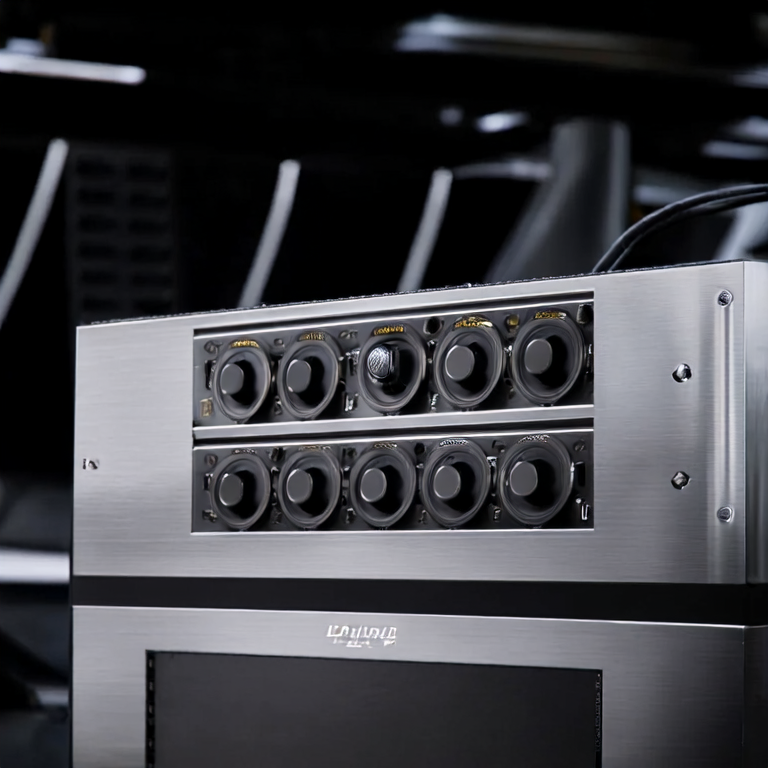
Traditional linear amplifiers, including many Class A and Class AB designs, continuously conduct current through their output devices. This can generate substantial heat, particularly when the amplifier operates for many hours at high output levels.
A Digital Class D PA Amplifier uses high-frequency switching technology. Instead of dissipating most unused energy as heat, it rapidly switches the output devices on and off and reconstructs the audio waveform through filtering. In practical commercial systems, Class D efficiency is commonly around 85% to 95%, depending on load, output level, power supply design, and operating conditions.
That efficiency matters because a PA amplifier often operates continuously. A factory paging system, school bell system, house-of-worship installation, or hotel background music system may run for 8 to 24 hours every day. Even a modest efficiency improvement can reduce:
For system owners, this is not simply an audio specification. It is an operational and financial decision.
Several technical causes commonly contribute to PA system failure or poor sound quality.
A conventional amplifier may convert a significant portion of incoming electrical energy into heat. When multiple amplifiers are installed in a rack, the combined thermal output can become substantial.
For example, if a 1,000 W amplifier operates at 60% efficiency, approximately 667 W may be lost as heat while delivering 1,000 W of audio output. At 90% efficiency, the waste falls to approximately 111 W under comparable conditions. Actual results vary by model and program material, but the principle is clear: higher efficiency reduces wasted energy.
Commercial PA systems frequently use 70 V or 100 V distributed audio lines. If the total speaker tap load exceeds the amplifier’s rated capacity, the output stage may overheat, enter protection mode, or suffer long-term reliability problems.
A professional design should calculate:
A common engineering practice is to keep the connected load at approximately 80% of the amplifier’s rated output. For a 500 W amplifier, a connected load of around 400 W provides useful reserve capacity, although the final value depends on the installation and duty cycle.
Feedback, clipping, background noise, and inconsistent volume often result from incorrect gain staging rather than inadequate amplifier power. A modern amplifier with integrated DSP may provide:
These functions help optimize the complete signal chain from microphone to loudspeaker.
A PA amplifier used in a commercial environment must handle abnormal conditions. Short circuits, overloads, high temperature, DC offset, and unstable loads can damage equipment if protection circuits are insufficient.
When evaluating AISP or another supplier, ask whether the amplifier includes:
The business case for a Digital Class D PA Amplifier extends beyond sound quality.
Reduced heat generation can lower both direct power consumption and cooling demand. In a large facility with multiple rack-mounted amplifiers, the HVAC savings may be significant over the equipment’s service life.
A simplified energy comparison illustrates the opportunity:
| Parameter | Conventional Amplifier | Class D Amplifier |
|---|---|---|
| Audio output | 1,000 W | 1,000 W |
| Example efficiency | 60% | 90% |
| Approximate input power | 1,667 W | 1,111 W |
| Approximate heat loss | 667 W | 111 W |
| Daily operation | 10 hours | 10 hours |
This example indicates a potential difference of approximately 5.56 kWh per operating day. Actual savings depend on output level, program material, standby behavior, and local electricity pricing.
Because Class D output stages are compact and lightweight, manufacturers can design high-power amplifiers in smaller rack spaces. This benefits:
Lower chassis weight also reduces shipping, handling, and installation labor.
Digital signal processing enables repeatable system configuration. An installer can store gain, EQ, limiter, and delay parameters rather than relying on manual adjustments. This is especially valuable for multi-site businesses that need consistent paging volume and audio response across different locations.
AISP buyers should request configuration documentation, wiring diagrams, and test results for each installation. A professional supplier should also be able to provide technical support with a defined response target, such as a 24-hour response for priority service requests.
Although results differ by application, the efficiency advantage of switching amplifiers is well established in professional audio engineering. A Class D amplifier can reduce heat dissipation and energy demand compared with many linear designs, especially at medium and high output levels.
Consider a distribution center operating a 2,000 W PA system for 12 hours per day:
Over 300 operating days, this represents approximately 3,999 kWh of potential electrical difference before considering cooling-system savings. The exact result must be verified through measured power consumption, but this type of calculation helps facilities managers estimate return on investment.
Suppose a hotel needs background music, emergency paging, and conference audio across four zones. A linear amplifier solution may require several large chassis units and additional ventilation. An AISP Digital Class D PA Amplifier with multi-zone routing and DSP can potentially reduce rack space while supporting:
The benefit is not only a cleaner rack. It can also mean faster commissioning and fewer service calls caused by overheating or unstable output levels.
Product quality should be verified through documentation rather than marketing language alone. When comparing an AISP Digital Class D PA Amplifier with competing models, request evidence covering the following areas:
Depending on the destination market, relevant requirements may include:
The exact applicable standard depends on the product classification, voltage, market, and certification route. Buyers should verify certificates and declarations with the manufacturer.
A trustworthy supplier should be able to explain its inspection process. Useful questions include:
For export projects, also request packaging drop-test information, operating temperature data, warranty terms, and spare-parts availability.
Correct installation is essential, regardless of amplifier brand.
Identify whether the system is intended for:
Speech systems prioritize clarity and consistent coverage, while entertainment systems may require greater bandwidth and dynamic headroom.
Add all loudspeaker tap settings and confirm that the total remains within the amplifier’s rated capacity. For a 100 V line system, verify transformer taps, cable length, and expected voltage drop.
Set input gain conservatively and avoid clipping at the mixer, DSP, or amplifier input. Use high-pass filters to remove unnecessary low-frequency energy from speech channels.
Set limiters according to loudspeaker power ratings. Incorrect limiter settings can either damage speakers or reduce usable volume.
Measure:
Keep commissioning records so future technicians can identify performance changes.
Failing to address amplifier inefficiency and reliability can create several long-term risks:
These risks become more serious when business conditions change. A company may expand into additional zones, increase operating hours, or require emergency communication compliance. An amplifier that was adequate five years ago may no longer provide sufficient headroom or control.
Replacing equipment only after repeated failures is usually more expensive than planning a properly specified upgrade.
AISP can be considered when a project requires a balance of efficiency, compact design, digital control, and commercial reliability. However, buyers should evaluate the complete supply package—not only the amplifier’s rated wattage.
A strong procurement checklist includes:
The best Digital Class D PA Amplifier is not necessarily the model with the highest wattage. It is the model that matches the load, duty cycle, acoustic goal, safety requirements, and future expansion plan.
Why Choose a Digital Class D PA Amplifier? Because it can deliver efficient power conversion, reduced heat, flexible DSP control, and dependable performance in demanding commercial environments. An AISP Digital Class D PA Amplifier may help organizations reduce operating costs and simplify installation, provided that the product is correctly sized, documented, tested, and commissioned.
Before placing an order, calculate the total load, request compliance documentation, confirm protection functions, and require measurable factory quality records such as 100% inspection where applicable. Contact AISP with your zone count, loudspeaker type, impedance, required output power, operating hours, and target market standards. Taking action before failures occur can protect system availability, reduce lifecycle costs, and provide clearer communication for years to come.
Latest News


Request a Quote or More Information
Fill out the form below for someone to contact you reguarding quotes and questions. Or visit our contact page for general contact information.


 Aug. 12, 2024