News
 Aug. 14, 2026
Distributors sourcing professional audio equipment need more than a low unit price: they need a reliable wholesale power amplifier buying guide for distributors that reduces returns, simplifies installation, and protects margin. This guide explains how to evaluate bulk commercial audio power amplifiers, compare an OEM power amplifier supplier, and verify impedance matching, Class-D amplification, RMS power, THD+N, and signal-to-noise ratio. It is designed for AV integrators, pro-audio wholesalers, security distributors, and regional dealers serving retail, hospitality, education, worship, and public-address projects.
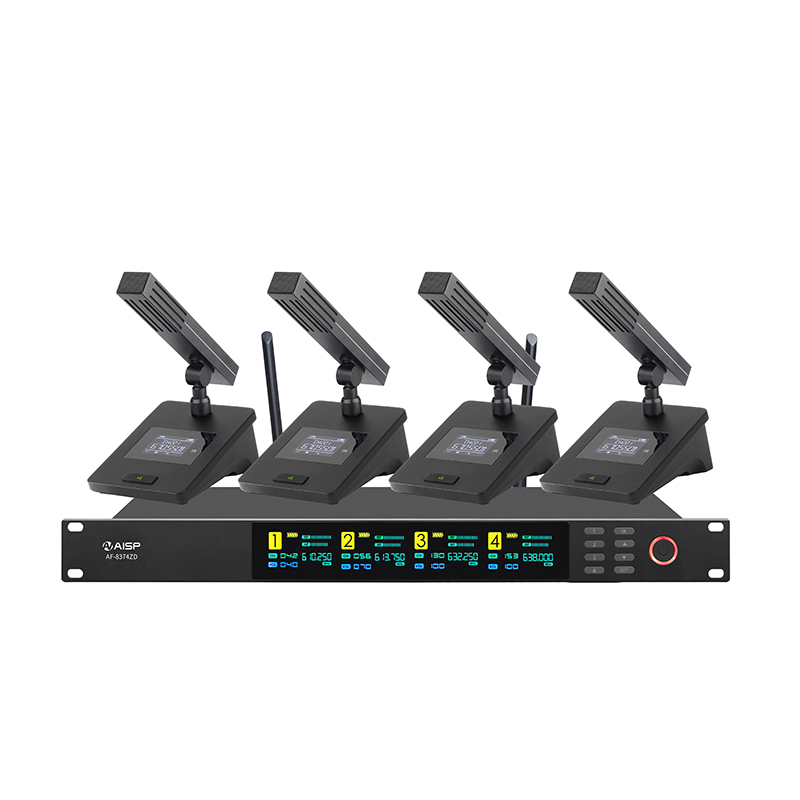
A power amplifier may appear to be a simple box between a mixer and loudspeakers, but its commercial success depends on electrical compatibility, thermal behavior, deployment speed, and after-sales support. A distributor can lose more money from one unsuitable batch than from a slightly higher purchase price. Typical failure points include an amplifier that cannot drive the required load, a 4-ohm system connected to a 2-ohm-sensitive output stage, inadequate cooling in a rack, inaccurate wattage claims, or a product lacking regional certification.
For example, a 1,000 W amplifier rating is meaningful only when the test condition is stated. The output may be specified at 1 kHz, into 4 ohms, at 1% THD, in bridged mode, or as a short-duration peak. These conditions are not equivalent to continuous program power. A professional distributor should therefore compare continuous RMS output, frequency response, THD+N, protection behavior, cooling design, and warranty terms before comparing price.
RMS power represents the continuous electrical output under a defined test condition. Peak or burst power describes short-duration capability and should not be used alone for sizing a sound system. A practical amplifier selection normally provides approximately 1.5 to 2 times the loudspeaker’s continuous power rating when the speaker manufacturer permits that range. This reserve, known as headroom, helps reproduce musical transients without immediately clipping.
Suppose a loudspeaker is rated at 500 W continuous at 8 ohms. An amplifier delivering approximately 750–1,000 W per channel at 8 ohms may be suitable, provided the loudspeaker’s peak rating, limiter settings, and installation conditions support the choice. The final decision must also consider the number of cabinets connected in parallel and the resulting load impedance.
Impedance determines how much current the amplifier must supply. For two identical 8-ohm speakers connected in parallel, the nominal load becomes 4 ohms. Four identical 8-ohm speakers in parallel create a 2-ohm load. Lower impedance increases current demand and heat production, so an amplifier rated for 4 ohms should not automatically be used at 2 ohms.
Distributors should request the following data for every channel:
Class AB amplifiers use a traditional linear output stage and can provide predictable sonic performance, but their efficiency is commonly lower than modern Class-D designs. Class-D amplifiers use high-frequency switching and output filtering. Depending on the design and operating point, a commercial Class-D amplifier may achieve approximately 85–95% electrical efficiency, reducing rack heat and electricity consumption compared with many conventional linear designs.
Efficiency is important in high-volume distribution projects. If an amplifier operates at 1,000 W output with 90% efficiency, approximately 111 W is lost as heat. At 70% efficiency, the loss is approximately 429 W under the same simplified output assumption. Actual system consumption varies with program material, crest factor, and power-supply design, but the comparison shows why thermal engineering matters in dense racks.
THD+N, or total harmonic distortion plus noise, measures unwanted harmonic energy and noise relative to the output signal. A lower percentage generally indicates cleaner reproduction, but the test frequency, output level, bandwidth, and load must be published. A specification of 0.05% THD+N at 1 kHz and 1 W is not directly comparable with 0.1% at full rated power across 20 Hz–20 kHz.
Signal-to-noise ratio indicates the difference between the reference output and the noise floor. A stated value of 100 dB is useful only when the reference is clear, such as A-weighted, 20 Hz–20 kHz, or relative to rated power. For speech reinforcement, a stable noise floor is particularly important in classrooms, conference rooms, houses of worship, and retail spaces where listeners may be close to the loudspeaker.
Other useful specifications include:
Start with the application rather than the catalog price. Record the venue type, audience size, loudspeaker model, number of zones, expected operating hours, rack location, available mains voltage, and control requirements.
Use loudspeaker sensitivity, listening distance, target SPL, and acoustic losses instead of selecting an amplifier by wattage alone. Sound pressure decreases by approximately 6 dB each time the distance from a point source doubles in a free field. Real rooms alter this relationship through reflection, absorption, and boundary reinforcement.
A simplified electrical sizing method is:
Required amplifier power ≈ speaker continuous rating × desired headroom factor
For a 400 W continuous speaker, a 1.5 factor suggests approximately 600 W per channel. If two speakers are connected in parallel, confirm that the amplifier’s output rating at the resulting impedance is at least 600 W per channel and that the speaker manufacturer allows the selected configuration.
For 70 V or 100 V line systems, add the transformer taps for all connected speakers and include reserve capacity. If a zone contains ten speakers tapped at 30 W, the nominal load is 300 W. A distributor may specify an amplifier with approximately 360–450 W of usable output, depending on the project’s expansion plan and manufacturer guidance.
Before requesting a quotation, create a compatibility checklist:
In a rack, allow front-to-back airflow and avoid placing a heat-producing device directly above a sensitive processor. A specification sheet should state fan-control behavior, maximum heat dissipation, and protection recovery conditions. “Fan cooled” alone does not tell a distributor whether the product is suitable for a 24-hour installation.
Request technical and commercial documents from at least two or three suppliers. A credible OEM power amplifier supplier should provide a model-specific datasheet rather than a generic series brochure.
A distributor should also check whether the supplier can maintain the same component specification across repeat orders. Substituting capacitors, fans, output devices, or connectors without notification can change noise, thermal behavior, and service life.
Bench testing converts marketing claims into purchasing evidence. Recommended tools include a calibrated audio analyzer, true-RMS multimeter, oscilloscope, programmable AC source, resistive dummy load, thermal camera, SPL meter, and power analyzer.
For a batch intended for commercial installation, retain the test report, serial numbers, firmware version, and approved sample. This creates a reference for incoming quality control and warranty analysis.
Certification requirements vary by destination and product configuration. Depending on the market, distributors may need documents related to electrical safety, electromagnetic compatibility, energy efficiency, restricted substances, radio functions, or environmental packaging. Confirm whether the certificate covers the exact model, voltage version, and factory address.
Packaging should protect front panels, rack ears, connectors, and displays from impact. Ask for carton dimensions, gross weight, pallet quantity, HS code guidance, and shipping terms. A lower factory price can be offset by oversized cartons, high damage rates, or air-freight restrictions for certain components.
Calculate more than the purchase price:
For example, an amplifier that costs 8% more but reduces rack heat, installation time, and field failures may produce a lower five-year ownership cost. Use measured data from sample testing rather than relying on general claims such as “energy-saving” or “industrial grade.”
A retailer has 24 ceiling speakers rated at 15 W each across four zones. The connected load is 360 W if every transformer tap is used at its full rating. A distributor could specify a four-channel 100 V amplifier with approximately 120 W per channel, provided each zone remains within its channel limit and the amplifier includes suitable overload protection. Zone-by-zone volume control and remote fault indication may be more valuable than excessive peak wattage.
Two 8-ohm speakers rated at 300 W continuous are connected in parallel, creating a 4-ohm nominal load. The distributor should seek an amplifier capable of approximately 450–600 W per channel at 4 ohms, depending on the speaker manufacturer’s recommended headroom. Balanced input, a selectable limiter, low idle noise, and automatic standby can improve the installation outcome.
A hotel may operate background music and paging systems for 12–16 hours per day. In this environment, measured thermal stability, dust-resistant airflow, fault logging, and accessible service parts are central purchasing criteria. A compact Class-D design can reduce rack heat, but the distributor should still verify temperature rise during sustained operation at the intended load.
There is no universal wattage. First identify speaker continuous power, impedance, sensitivity, target SPL, number of zones, and operating schedule. Then select a model with suitable headroom and documented output under the actual load.
Class-D is often advantageous where low weight, compact rack space, and reduced heat are important. However, design quality matters more than the class label. Compare efficiency, distortion, cooling, protection, serviceability, and measured output.
Only if the manufacturer explicitly rates it for 2-ohm operation. A lower impedance requires higher current. If 2-ohm capability is not documented, use a different amplifier or redesign the speaker wiring.
Request a model-specific datasheet, user manual, dimensional drawing, wiring diagram, test report, certification documents, warranty terms, packing list, spare-parts list, and quality-control procedure. For private-label products, also request artwork specifications and firmware version control.
Use an approved sample, verify the customer’s speaker impedance and voltage system, provide wiring guidance, test incoming batches, maintain serial-number records, and train installers to configure gain structure and limiters correctly.
Gain structure should keep each device below clipping while maintaining a useful signal level. Set mixer output, processor gain, amplifier input sensitivity, and limiter thresholds as a complete system. A high amplifier gain combined with a weak mixer output can raise the audible noise floor, while excessive processor gain can cause clipping before the amplifier reaches its rated output.
Networked DSP is valuable when a distributor serves multi-site customers or managed AV projects. Useful functions include parametric EQ, high-pass filters, crossover slopes, delay, polarity control, temperature monitoring, impedance monitoring, and event logs. Do not pay for advanced software if the target customer only needs two-channel analog amplification and local volume control.
Assign weighted scores before evaluating quotations. One practical model is:
This method prevents a low initial price from outweighing poor thermal performance, inconsistent output, or inadequate after-sales service.
The strongest purchasing decision combines application analysis, impedance matching, RMS power verification, thermal testing, certification review, logistics planning, and total-cost calculation. Distributors should compare bulk commercial audio power amplifiers by documented output conditions, not headline peak watts; evaluate an OEM power amplifier supplier through samples and quality records; and specify Class-D amplification, rack-mount audio amplifier construction, RMS power, THD+N, and signal-to-noise ratio according to the project. For private-label, OEM, and commercial installation requirements, contact AISP to discuss a suitable wholesale power amplifier solution and request model data, samples, and distributor support.
Latest News


Request a Quote or More Information
Fill out the form below for someone to contact you reguarding quotes and questions. Or visit our contact page for general contact information.


 Aug. 12, 2024