News
 Nov. 03, 2025
Class-D Amplifiers offer a modern solution to audio amplification, often compared to the older Class-AB types. Understanding the differences can be confusing for many. This article aims to clarify these differences and help you make an informed choice. In audio systems, efficiency, sound quality, and size are crucial factors. Many users struggle with choosing the right amplifier type for their needs. Is it better to go with Class-D or stick with the tried-and-true Class-AB?
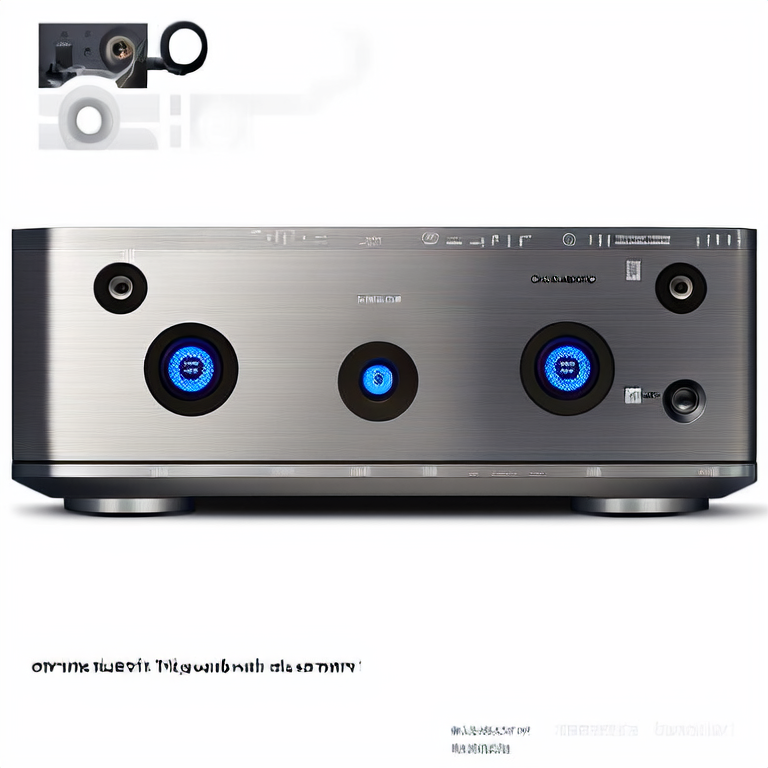
Class-D amplifiers are generally more efficient and compact than Class-AB amplifiers while providing excellent sound quality. However, Class-AB amplifiers are often preferred for high-fidelity applications where sound quality is paramount.
Class-D amplifiers are known for their high efficiency rates of about 90% or more. In contrast, Class-AB amplifiers typically have efficiencies around 50-70%.
Due to their design and components, Class-D amplifiers are usually much smaller and lighter. This makes them ideal for portable or space-sensitive applications.
While Class-D amplifiers have improved significantly, Class-AB amplifiers are still considered superior for high-fidelity audio reproduction. Many audiophiles prefer Class-AB for its warm sound.
Class-D amplifiers generate less heat, which reduces the need for extensive cooling systems. Class-AB amplifiers, on the other hand, can become quite hot during operation.
Class-D amplifiers are often more affordable due to their simpler components. However, high-end Class-AB amplifiers can be expensive and are often viewed as an investment in sound quality.
Class-D amplifiers are great for home theater setups, portable speakers, and car audio systems. Class-AB amplifiers are commonly found in professional audio equipment and high-end home audio systems.
| Comparison Factor | Class D Amplifier | Class AB Amplifier |
|---|---|---|
| Operating method | High-frequency switching output stage | Linear output stage |
| Efficiency | Generally higher | Generally lower |
| Heat generation | Lower at comparable output power | Higher at comparable output power |
| Size and weight | Usually smaller and lighter | Often requires larger heat sinks |
| Power density | High | Lower |
| Audio quality | Can provide excellent low-distortion performance | Can provide excellent low-distortion performance |
| EMI considerations | Requires careful switching and filter design | Generally presents fewer switching-related EMI concerns |
| Typical applications | PA systems, multi-channel audio, powered speakers and compact equipment | Hi-fi audio, traditional professional amplifiers and moderate-power analog systems |
| Best selection method | Compare specifications and project needs | Compare specifications and project needs |
The amplifier class alone does not determine the final sound quality. Buyers should compare actual test data, including total harmonic distortion plus noise, signal-to-noise ratio, frequency response, output power and performance under the intended speaker load.
For many commercial and public address applications, a Class D amplifier for a PA system provides practical advantages.
Class D may be preferred when the project requires:
These requirements are common in schools, transportation facilities, shopping centers, factories, office buildings and multi-zone background music systems.
A Class AB amplifier may still be appropriate when:
For a PA project, amplifier class should be considered together with output configuration. Buyers must also confirm whether the amplifier supports 70V, 100V or low-impedance speaker systems.
Both amplifier classes can be used for high-fidelity audio.
Class AB has a long history in hi-fi equipment and remains available in many premium stereo amplifiers. Its linear design is familiar to audio engineers and buyers.
Modern Class D amplifiers are also used in high-performance audio equipment. Their sound quality should be evaluated through measurements and listening tests rather than rejected based only on amplifier class.
For hi-fi purchasing, compare:
The implementation matters more than the class label alone.
Use the following questions before selecting an amplifier:
For most high-power, compact or multi-channel commercial audio installations, Class D is often the more practical option. For traditional linear audio designs and certain moderate-power applications, Class AB remains a valid choice.
In summary, both Class-D and Class-AB amplifiers have their strengths and weaknesses. Class-D amplifiers excel in efficiency and size, making them suitable for many applications. However, if sound quality is your top priority, Class-AB amplifiers are often the better choice. Understanding these differences can help consumers make informed decisions about their audio equipment.
AISP provides Class D amplifiers and other PA power amplifier solutions for distributors, installers and system integrators. Contact our team with your required output power, channel quantity, speaker load and application to receive a suitable product recommendation.
A Class-D amplifier uses a switching mechanism to amplify audio signals, allowing for higher efficiency.
A Class-AB amplifier is a type of analog amplifier that combines the characteristics of Class-A and Class-B amplifiers to produce a high-quality output.
Class-AB amplifiers are typically considered better for sound quality compared to Class-D amplifiers, especially in high-fidelity audio setups.
Yes, Class-D amplifiers are generally more efficient, with efficiency rates often exceeding 90%.
Absolutely! Class-D amplifiers are widely used in home audio systems due to their compact size and efficiency.
Some audiophiles believe Class-D amplifiers may not produce the same warm sound quality as Class-AB amplifiers.
Latest News


Request a Quote or More Information
Fill out the form below for someone to contact you reguarding quotes and questions. Or visit our contact page for general contact information.


 Aug. 12, 2024